2026 Joint Funding Awards

Over the past six years, the University has cultivated impactful partnerships with world‑leading institutions across the globe. Together, we have developed joint funding programmes designed to encourage innovative research and teaching collaborations. These initiatives bring teams together, draw on the academic strengths of each institution, and establish a foundation for sustainable, long‑term relationships that support our shared ambitions for the future.
The new awards for 2026 – spanning international relations, philosophy, neuroscience, mathematics, biology, and education – exemplify these ambitions, showcasing the collective expertise and commitment that continue to drive these partnerships forward. In addition to our established programmes with the University of Bonn, Emory University and National Taiwan University, we were proud to introduce a new partnership scheme with the Hong Kong University of Science and Technology, as well as a dedicated education‑focused initiative with Bonn. Together, these additions enrich our portfolio of international engagement opportunities, opening up even more pathways for St Andrews researchers to connect, collaborate, and create meaningful global impact.
University of Bonn Collaborative Research Grant Awards
‘On Proofs and Partnerships: How AI, Big Data and Proof Assistants are Transforming Mathematical Practices’
The partnership between Dr Deborah Kent (St Andrews) and Dr Michael Friedman (Hausdorff Center for Mathematics, Bonn) investigates how artificial intelligence, automated proof assistants and large datasets are reshaping mathematical research, while tracing the historical roots of these technologies. Dr Kent commented: “This funding will support two workshops, one in Bonn and one in St Andrews, to facilitate discussion and development of future work. We also plan interviews with contemporary practitioners involved in using AI-generated results, big data, and automated proof assistants in mathematical work.”
‘Generating AI Binders to combat Anti-microbial Resistance’
The research collaboration led by Prof Malcolm White (St Andrews) and Dr Gregor Hagelueken (Bonn) focuses on developing AI-designed protein binders capable of deactivating key bacterial proteins—an exciting frontier in tackling antimicrobial resistance. Prof White said: “This funding will cement a growing collaboration between our labs in St Andrews and Bonn, enabling exchange visits and workshops as we develop new approaches to tackle antibiotic-resistant bacteria using the power of AI. We are all excited to get started!”
University of Bonn Joint Education Seed Funding Award
‘Developing Game Play as a Co-creative Approach to Teaching and Learning: Investigating Scholarly Approaches and Curriculum Design’
Dr Claudia Rossignoli (St Andrews) and Prof Adrian Hermann (Bonn) are jointly exploring game-based learning as a collaborative pedagogical tool, examining how gameplay can support inclusive teaching practices, scholarly engagement and innovative curriculum design. Their work will help shape co‑creative approaches to teaching across the humanities. It is the first joint education seed funding project with the University of Bonn.
Emory University Collaborative Research Grant Award
‘Genetic and physiological tools for revealing and reversing ALS pathology’
The project involving Dr Ilary Allodi (St Andrews) and Prof Sam Sober (Emory University) brings together cutting-edge genetic and electrophysiological tools to better understand how motor neurons degenerate in Amyotrophic lateral sclerosis (ALS). ALS is the most common and severe form of Motor Neurone Disease. Their collaboration aims to explore new possibilities for restoring lost function and accelerate discoveries that may benefit future therapeutic pathways.
National Taiwan University Joint Seed Funding Awards
‘Emulation and Conflict from a Cross-Cultural Perspective: Spinoza and Zhuangzi‘
’The collaboration between Dr Alexander Douglas (St Andrews) and Dr Wim De Reu (National Taiwan University) explores how ideas from the philosopher Spinoza and the ancient Chinese text Zhuangzi can help us understand why ideological and cultural conflicts arise. Their project examines how people often become attached to certain role models or “exemplars,” which can limit their perspectives and make disagreements harder to resolve. Through joint seminars, research visits and shared textual study, the project develops a cross‑cultural approach to thinking about conflict and how it might be eased. Dr Douglas noted: “This funding will allow us to travel to run workshops at both universities, open to staff and students, with results publicised beyond the universities. This will be a first step towards an ongoing partnership allowing us to share the expertise of our two departments, particularly in the history of Western philosophy at St Andrews and East Asian philosophy at NTU.”
‘How do we know what ‘hard-to-survey’ people think? A pilot study of public opinion in equality, diversity and inclusion in and around Myanmar’
The project led by Dr Matteo Fumagalli (St Andrews) and Dr Kai-Ping Huang (National Taiwan University) investigates innovative ways to understand public opinion among groups traditionally difficult to survey, particularly in politically volatile contexts such as Myanmar. Dr Fumagalli said, “We are delighted to receive support for this project. Five years after the 2021 military coup, the people of Myanmar remain caught in mutually reinforcing crises of war, mass forced displacement and humanitarian needs. This grant enables one of the very first projects to restart in-country surveys. We are especially interested in assessing (inter-)group relations, lived experiences and individual beliefs in relation to questions of diversity and inclusion.”

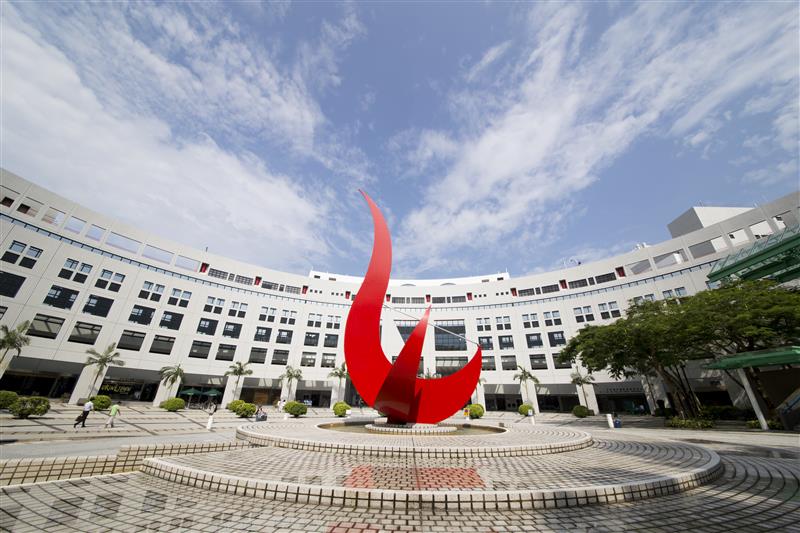
Hong Kong University of Science and Technology Joint Seed Funding Awards
‘Hybrid ENZ Metasurface for Nonlinear Optical Information Processing’
The collaboration between Prof Andrea di Falco (St Andrews) and Prof Che Ting Chan (Hong Kong University of Science and Technology) and explores hybrid epsilon‑near‑zero (ENZ) metasurfaces as a new platform for nonlinear optical information processing. By combining HKUST’s theoretical strengths in advanced materials with St Andrews’ expertise in nanofabrication and optical characterisation, the team will investigate how ENZ materials coupled with nanoscale antenna structures can enable low‑power, energy‑efficient control of light for next‑generation computing. Reflecting on the collaboration, Prof. Di Falco said: “This is a great opportunity to bring together the complementary expertise at HKUST and St Andrews in advanced optical (meta)materials design, fabrication and characterisation. The funding will enable research visits and support skill transfer, laying the foundation for a new collaboration and high‑impact research outcomes in information technology.”
‘Developing a novel framewsork for understanding ocean biogeochemical change’
The project led by Dr Graeme MacGilchrist (St Andrews) and Dr Julian Mak (HKUST) develops a novel analytical framework to better understand future changes in ocean biogeochemistry, including acidification and deoxygenation. By reconfiguring the widely used NEMO ocean model to output data in “watermass coordinates,” their approach simplifies complex global patterns and enables clearer comparisons across climate models. Dr MacGilchirst said “The patterns of ocean change around the world — from the ocean losing oxygen to it becoming more acidic — present really significant global challenges. There are lots of research labs around the world trying to understand the change that’s happening, and make predictions about what might happen in the future. This seed funding grant offers a fantastic opportunity for my research group to spin up a collaboration with Dr. Mak’s lab in Hong Kong. We’re addressing a particularly thorny technical challenge to do with model simulations, and that will benefit from having the opportunity to spend a few dedicated weeks staring at a computer screen together!”
‘Bridging Language and Vision: Towards Physically Plausible and Semantically Faithful Video Generation’
The collaboration between Dr Phong Le (St Andrews) and Prof Harry Yang (HKUST) aims to tackles a core challenge in generative AI: producing images and videos that accurately follow textual prompts while remaining physically realistic. By combining their expertise in video generation and language understanding, the researchers aims to reduce AI hallucinations, improve motion smoothness and follow textual descriptions accurately. The project aims to produce new algorithms, benchmarks and modelling frameworks, with wide‑ranging applications in creative media, education and assistive technologies.
We warmly congratulate all our 2026 awardees and look forward to seeing these exciting collaborations develop over the coming year and beyond. You can find out more about our other joint funding programmes on the Global Office webpages, or by contacting the team directly at [email protected].