2025 Joint Seed Funding and Research Grant Awards

The Global Office is pleased to announce the outcomes of the University’s joint funding programmes with its partner universities: Emory University, University of Bonn and National Taiwan University. We have gathered a few of the projects here, which address some of the world’s most pressing challenges. From understanding communities marginalised by violence and how species evolve to developing energy-efficient OLEDs and AI-powered weather forecasting, St Andrews researchers work with colleagues at partner universities to produce innovative solutions and new understandings.
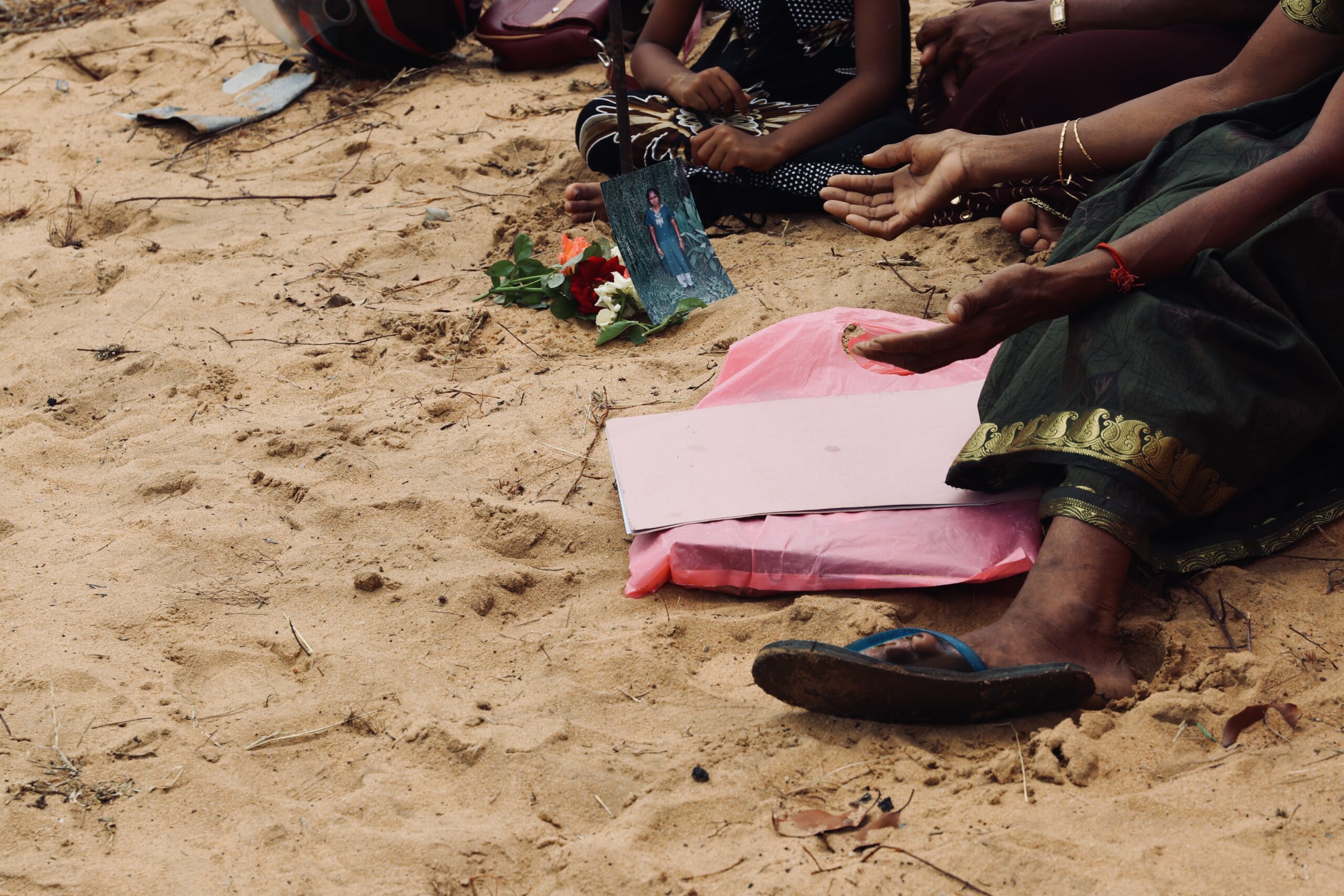
Dr Vindhya Lakshmi Buthpitiya (Department of Social Anthropology, University of St Andrews) and Dr Briana Woods-Jaeger (Rollins School of Public Health, Emory University) received a collaborative research grant to investigate how young people make and share images as a form of political expression and action across distinct national contexts. Responsive Images examines the common characteristics and conditions that underpin experiences of collective trauma and structural and political violence by racialized communities in the global north and south. The researchers will work with Dr Jessica Glass (Social and Health Education Sciences, Emory Rollins School of Public Health) and Dr Viviane Saglier (Department of Film Studies, University of St Andrews) to broaden understanding of these images.
On Wednesday 12 March, Dr Briana Woods-Jaeger will give a public lecture in St Andrews, “Storytelling through Qualitative Participatory Research to Promote Resilience after Trauma.” Over the past ten years, Dr Woods-Jaeger and her team have worked with youth and adults affected by structural violence to create Youth Empowered Advocating for Health (YEAH), an intervention that focuses on resilience, youth empowerment and resisting structural violence. This presentation will discuss this project, and offer a framework for community-partnered research that supports sustainable change in marginalized communities.
Professor Ifor Samuel (School of Physics and Astronomy, St Andrews) and Professor Ken-Tsung Wong (Department of Chemistry, National Taiwan University) are working together to develop the next-generation of organic lasers and organic light-emitting diodes (OLEDs). At present, commercial lasers and LEDs often require toxic raw materials in their production. By using organic (carbon-based) semiconductors, the team aim to reduce the energy required for manufacturing and help to protect the environment. Prof Samuel said:
We are very pleased to be able to combine the skills of world-leading chemists at NTU and the recent breakthrough in organic lasers at the Organic Semiconductor Centre (OSC) in St Andrews. We look forward to research visits to test new materials, and workshops to discuss results, share expertise and plan future joint research.
Dr Simon Lee (School of Earth and Environmental Sciences, St Andrews) and Dr Yu-Chiao Liang (Department of Atmospheric Sciences, National Taiwan University) aim to improve weather forecasts for 2-weeks to 2-months ahead. They will analyse the polar vortex winds, which have an unpredictable impact on weather in the Northern Hemisphere, and combine machine learning techniques, dynamic insights and models from the Taiwan Central Weather Administration. Dr Lee noted:
We are most grateful to receive this funding, which provides a unique opportunity to bring together diverse expertise from both institutions, including the recently established National Centre for Atmospheric Science at St Andrews, in addition to supporting transformative student research visits and knowledge exchange with forecasters. Weather and climate affect us all, and new avenues of international collaboration are critical.
Dr Carolin Koisol (School of Biology, St Andrews) will work with Prof. Alexander Suh (Bonn Institute for Organismic Biology) are working on a project which aims to understand how new species emerge. With the growing affordability of genomic sequencing, it is now possible to analyse the genetics of evolution using samples from varied sources. Dr Koisol explained:
Our collaboration between Bonn and St Andrews will bring researchers together to work on temporal genomic data from diverse sources: museums, laboratories, and the wild. This temporal-spatio perspective which unfolds the speciation process over time as opposed to a single time-point, not only lets us understand the evolutionary past, it also has the potential to predict future changes of biodiversity.
The University of St Andrews currently has joint funding programmes with five universities: University of Bonn, Charles University, Emory University, University of Padua and National Taiwan University. A full list of awarded projects and details of upcoming calls can be found on the same page. Please email [email protected] if you have any questions about the funding programmes.